Alaska Itinerary: 5 Days in the Last Frontier
Alaska is the largest state in the United States and well known for its rugged wilderness, stunning natural beauty, and unique culture. Two of the most popular destinations are Fairbanks and Anchorage, which offer a glimpse into the state's history, culture, and natural wonders. We had been planning to visit Alaska for more than a year, especially to see the Northern Lights. After doing a lot of research and planning, we visited Fairbanks and Anchorage in the last week of March 2023. Here is our 5-day itinerary to help you make the most of your time in Alaska.
Day 1: Arrival in Fairbanks — Northern Lights, Ice Championship, Dog Mushing & Chena Hot Springs
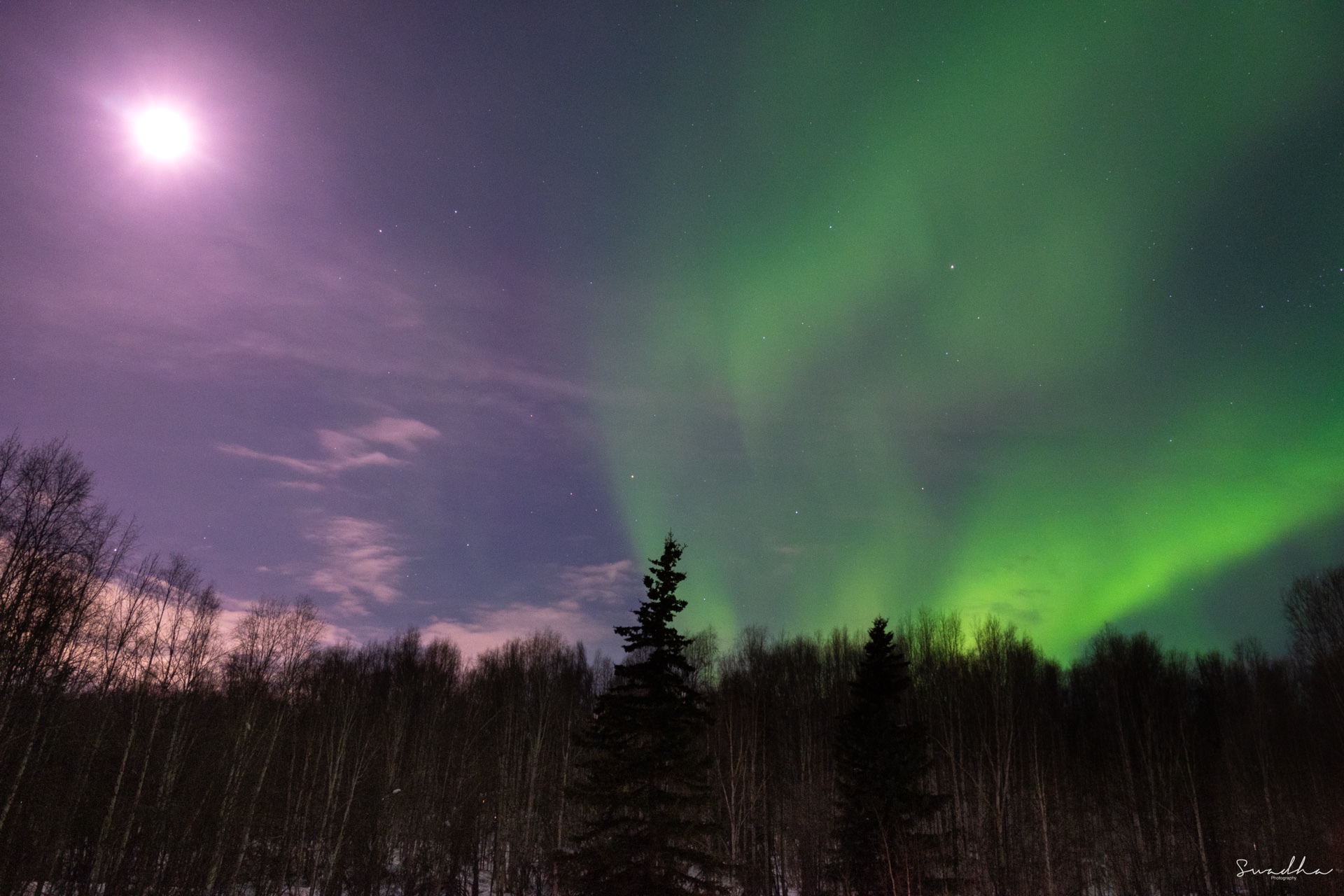
We took off from LAX around 5 PM and reached Fairbanks at midnight with a one-hour layover in Seattle. We intentionally booked a flight that arrived around midnight to maximize our chances of seeing the Northern Lights — and we were not disappointed at all. We were able to see the auroras even before we reached Fairbanks, from the plane itself. I was sitting on the right side of the airplane and noticed faint green lights outside. The lady next to me confirmed they were indeed the Northern Lights since she lives in Fairbanks and has seen them many times. I quickly turned off my in-flight entertainment screen to let my eyes adjust and started taking pictures with my phone. The green light kept getting brighter and soon covered more than half of the sky — vivid and beautiful with the naked eye.
Tip
Sit on the right side of the plane when flying from LAX, SeaTac, or SFO to Alaska, and on the left side on the return journey, for the best aurora views from the air.
After landing it was cloudy in Fairbanks with 99% cloud coverage — not promising. But as our Uber headed 12 miles out of the city toward Alaska Grizzly Lodge, the clouds began clearing and stars appeared. Our host Janet greeted us at midnight and immediately told us the auroras had appeared minutes earlier from the south deck. We rushed out and witnessed one of the best and brightest aurora shows we have ever seen — a 40 to 50 minute display that no photograph can truly capture. Choosing the Grizzly Lodge over a cheaper airport hotel was absolutely the right call: away from city light pollution, with unobstructed sky views in all directions.
After sleeping in until 9 AM, we had breakfast at the lodge and headed to the World Ice Art Championships — it was the last day before they closed. Ice sculptors from around the world showcase incredible works ranging from realistic animals to abstract designs carved from massive Alaskan ice blocks. We spent a couple of hours there before booking an Uber to our dog mushing experience with Paws for Adventure. Dog mushing is a traditional mode of transport in Alaska that has evolved into a popular recreational activity and competitive sport. Ten Alaskan huskies pulled us along a snow-covered 5-mile trail for 30 to 40 minutes — a truly unique way to experience the wilderness.
After lunch back at the lodge, we took a shuttle to Chena Hot Springs, about an hour away. We visited the ice museum, explored the grounds, and had lunch at the resort restaurant (limited but good vegetarian options). That evening we joined a Northern Lights tour at Charlie Dome — a 30-minute ride in a heated SUV to a hilltop viewing site with a heated yurt, noodles, hot chocolate, and coffee. Unfortunately the lights were minimal that night, showing only a gray hint visible to the naked eye though capturable as green on camera. We waited until 2:45 AM before heading back.
Tip
Stay at least three nights in Fairbanks to maximize your chances of seeing the Northern Lights. Cloud cover is unpredictable, and having multiple nights dramatically improves your odds.
Day 2: Arctic Circle Expedition
We checked out of Grizzly Lodge and into a Best Western Plus closer to our next day's train station. Our 14-hour Arctic Circle tour started at 2 PM, with guide Keaton picking us up in a 10-seat passenger van. The tour included hotel pickup and drop-off within Fairbanks city limits, plus free snacks, water, and sandwiches (request vegetarian at the time of booking).
Our first stop was the Alaska Oil Pipeline — 800 miles long, built in 1977 to transport oil from Prudhoe Bay to Valdez. We then joined the Dalton Highway, which is primarily used by truckers supporting the pipeline, and stopped at iconic spots including the Dalton Highway signboard, the Yukon River, and our favourite — the enchanted forest, a surreal landscape of black spruce trees draped in snow. After seven hours of driving we reached the Arctic Circle just after sunset and photographed the famous sign. The Arctic Circle marks the southernmost point where the sun does not rise for at least one full day in winter and does not set for at least one full day in summer.
On the drive back, Keaton stopped several times wherever the clouds seemed to be clearing, hoping to catch the Northern Lights — but it stayed overcast. We reached the hotel around 3:30 AM exhausted but with incredible memories. Keaton's deep knowledge of Alaskan landscape, culture, and wildlife made the long drive genuinely engaging throughout.
Day 3: The Alaska Railroad — Fairbanks to Anchorage
The morning started with a missed alarm, but our hotel's shuttle service saved us and we made the train just in time. After checking in at the station we had breakfast in the train's dining car. The first three hours from Fairbanks cross mostly flat terrain — a good time to rest. But once you reach Healy station, get your camera out. From there the journey becomes extraordinary: the snow-capped peaks of the Alaska Range, the Susitna Valley, and the Chugach Range fill the panoramic dome car windows for hours. We stopped at Denali station for about 15 minutes and stepped outside into falling snow for some incredible shots.
Train staff announced wildlife sightings throughout the journey, making it easy to spot animals in the wilderness. We saw multiple moose and bald eagles. We pulled into Anchorage at 8:15 PM, grabbed an Uber to pick up our rental car near the airport, and drove straight to the hotel — ordering Indian food for dinner and calling it a night.
Tip
Check the Alaska Railroad website for their full schedule of scenic trains during winter and summer months. Book well in advance — these sell out quickly.
Day 4: Anchorage to Seward — Spring Cruise in Kenai Fjords National Park
After finally getting a full night's sleep we drove two hours south from Anchorage to Seward. The drive itself is stunning — you will not notice how quickly the time passes. Kenai Fjords National Park offers cruises ranging from half-day trips to multi-day expeditions. Since we visited at the end of winter, the 4.5-hour spring wildlife cruise was the only option available, which was perfect for us.
Bring binoculars if you have them, though the tour company provides them as well. Our cruise guide shared fascinating information about the region's geology and wildlife throughout. We spotted sea otters, sea lions, bald eagles, orcas, mountain goats, porpoises, and seagulls. Watching orcas breach in the wild from just a short distance away was an experience we will never forget. This cruise is absolutely going on our list for the next Alaska trip.
Day 5: Anchorage to Palmer — Matanuska Glacier
After breakfast we drove two hours northeast from Anchorage toward Palmer, following the Glenn Highway through the Matanuska-Susitna Valley. The route passes snowcapped mountains, glaciers, and rivers — genuinely one of the most scenic drives we have done anywhere. After turning off toward Matanuska Glacier, we drove more than a mile on a dirt snow road to reach the tour company's check-in point, then another two miles on snow to meet our guides at the starting point.
The guides fitted us with micro spikes and snowshoes as needed, then snowmobile carts transported us onto the glacier. We explored tunnels carved into the ice, walked through narrow crevasses, and stood inside breathtaking ice caves with walls of deep blue. We even saw turquoise half-frozen glacier meltwater pooled between ice formations. The total experience from check-in to finish was about 3.5 to 4 hours and cost $125 per person — worth every dollar. After the Northern Lights on Day 1, this was the single most memorable experience of the entire trip.
Practical Tips
- Sit on the right side of the plane (LAX/SeaTac/SFO → Alaska) for aurora views from the air
- Visit in February or March to catch the World Ice Art Championships in Fairbanks
- Stay at least three nights in Fairbanks and choose accommodation outside city limits for Northern Lights viewing
- Book the Alaska Railroad dome car and Kenai Fjords cruise well in advance — both sell out fast
- Request vegetarian meals when booking guided tours — most operators accommodate with advance notice
- Bring binoculars for the Kenai Fjords wildlife cruise
- Layer aggressively in Fairbanks — temperatures can drop to -30°F and below
- Download the aurora forecast app and set alerts for KP index ≥ 3